
How to Get More Chiropractic Referrals: The Complete Guide
How to get more chiropractic referrals: when to ask, word-for-word scripts, events, provider partners, a 90-day plan, and which incentives are legal.
To get more chiropractic referrals, run a system instead of hoping for word of mouth: plant the seed at the first visit, ask when patients feel better, make it easy for the friend to book, thank every referrer, and add provider and community partners. Then log the referral source on every new patient.

TL;DR (updated November 2026): Referred patients are the warmest new patients a chiropractic practice can get. They arrive already trusting you, and someone they know has explained chiropractic better than any ad could. Yet most practices leave referrals to chance because they never ask. Build a system: plant the seed at the first visit, ask at the moments patients feel better, make it easy for the friend to book, cover the whole household, thank every referrer, and back it all with care worth talking about. Then widen the funnel with patient events, provider and community partners, and past patients, and track the referral source on every new patient. Before you reward anyone, read the legal section: referral incentives are regulated in healthcare.
Most people don’t choose a chiropractor the way they choose a dentist. Chiropractic usually isn’t the first thing they think of when something hurts. That’s not because they’ve decided it doesn’t work. It’s a knowledge gap: a lot of people simply don’t know what chiropractic is or what it could do for them.
Ads struggle to close that gap. A stranger’s ad has to explain chiropractic, earn trust, and get a booking all in a few seconds. A referral does all three at once. When your patient tells a coworker “you should see my chiropractor, she fixed my back,” the coworker hears it from someone they trust and who lived it.
That’s why referrals are the most valuable new patients you’ll ever get, and why leaving them to chance is so expensive. This guide is the full system we teach practices: what to say, when to say it, who else to build relationships with, a 90-day plan to launch it, and how to keep it legal.
Why Referrals Matter More Than Ever
Three things make referrals worth the effort:
- Trust is the scarcest thing in marketing. In Nielsen’s 2021 Trust in Advertising study of more than 40,000 consumers, recommendations from people they know were the most trusted source of all, trusted by 88% of respondents worldwide (Nielsen). No ad you run will ever be trusted the way a patient’s recommendation is.
- Referred people tend to stay. A well-known study of a referral program at a German bank (Schmitt, Skiera and Van den Bulte, Journal of Marketing, 2011) found referred customers were about 18% more likely to stay than other customers, and that gap didn’t fade over time (Knowledge at Wharton). That’s banking, not chiropractic. We haven’t found a chiropractic-specific study. But it matches what practices see: a referred patient shows up already understanding why they’re there, and that makes it easier to start care and follow through on a care plan.
- Word of mouth now drives search, too. The same happy patients who refer their friends also leave the reviews that decide which practices Google and AI assistants recommend. A referral culture and a strong online reputation are the same engine.
The catch: most of your happy patients will never refer anyone unless you give them a reason and a moment. They’re focused on their own problem, and they don’t know you want referrals. So everything below is about creating those moments on purpose.
Chiropractic Referral Methods, Compared
Here are the main ways practices generate referrals, and how they stack up:
| Method | Setup effort | Cost | Can you automate it? | Best for |
|---|---|---|---|---|
| Asking in person (with a script) | Low | Free | ❌ Manual | Every practice, start today |
| Referral cards | Low | 💲 Printing | ❌ Manual | A physical reminder that leaves the office |
| Text referral link after good visits | Medium | 💲💲 CRM | ✅ Fully automatic | Asking every patient, every time |
| Email referral campaigns | Medium | 💲 Email tool | ✅ Set and repeat | Your whole active and past patient list |
| Family and household care | Low | Free | ⚠️ Partly | The easiest referrals you’ll ever get |
| Patient events (appreciation, bring-a-friend) | Medium | 💲💲 Event costs | ⚠️ Invites only | A burst of new faces in one day |
| Incentives | Medium | 💲💲 Rewards | ⚠️ Partly | A short-term push, used carefully |
| Provider partners (PCPs, PTs, attorneys) | High | ⏳ Time | ❌ Relationship-based | Steady, high-value referrals |
| Community partners (gyms, studios, employers) | High | ⏳ Time | ❌ Relationship-based | Reaching people who’ve never tried chiropractic |
No single method wins. The best referral engines stack several. Start with the free tactics this week (asking, cards, family care), add the automated ones next (texts and email), and build the partnerships in the background for the long game.
The 7-Part Chiropractic Referral System
A chiropractic referral program is a repeatable system for turning happy patients and referring providers into a steady, trackable stream of new patients. Every program that works has the same seven parts:
- Plant the seed at the very first visit.
- Ask at the moments patients feel grateful, in person and through automated follow-ups.
- Make it easy for the referred friend to get in.
- Cover the household, because the people who live with your patient are the first referral.
- Incentivize participation, compliantly.
- Thank every referrer personally.
- Be a great doctor, so there’s something worth talking about.
Referral programs that fizzle out almost always fail in one of three places: the practice never actually asks, the referred friend has a bad first contact (a missed call, a slow callback), or nothing gets tracked, so nobody knows what’s working or whom to thank. Fix those three and you’re ahead of most practices.
1. Plant the Seed on Day One
The first visit is where a future referral starts. When you tell a new patient up front that your goal is to help them feel so good they’ll want to tell the people they care about, you make the later ask feel expected instead of awkward.
It doesn’t need to be a speech. Something like this works:
“I’m really glad you came in. My goal is to make such a difference in how you feel that you’ll want to tell your friends and family about it. A lot of people don’t realize what chiropractic can do, and the people who help spread the word are the patients who’ve experienced it.”
Use your education at the first visit, too. When patients understand why chiropractic helps (not just that it helped them), they can explain it to someone else. A patient who can say “she found the real cause of my headaches” is a far better referrer than one who can only say “it felt good.”
2. Ask at the Right Moments
This is the step most practices skip. They assume happy patients will refer on their own. Some will, but most won’t, because nobody asked. The good news: once you set it up at the first visit, asking doesn’t have to be uncomfortable. Make it about helping people, not about growing your business.
The best moments to ask for a chiropractic referral
Timing matters more than wording. Ask when the patient is feeling the difference:
| The moment | What it sounds like | Who asks |
|---|---|---|
| A patient reports a win | “I slept through the night for the first time in months.” | Doctor, right then |
| Progress exam or re-exam | Measurable improvement since the first visit | Doctor, at the report |
| They mention someone in pain | “My husband’s back has been killing him.” | Doctor or front desk |
| A happy comment at checkout | “You guys are the best.” | Front desk |
| Graduating to wellness care | Moving from corrective care to maintenance | Doctor |
| After they leave a great review | They just told the internet you’re great | Automated thank-you text |
Word-for-word referral scripts
Doctor, after a patient reports a win:
“That’s exactly what we were hoping for. You know, there are a lot of people walking around feeling the way you did when you first came in. If anyone comes to mind, a friend, a coworker, someone in your family, I’d love the chance to help them too.”
Front desk, at checkout:
“Dr. [Name] asked me to give you a few of these. If you know anyone you care about who could use some help, they can bring this card in for our new patient visit. I’ll write a date on it, they just need to come in before then.”
Automated text, a few days after a good visit:
“Hi [First name], it’s [Practice]. We loved seeing you this week! If you know someone who could use our help, you can send them our way here: [referral link]. Thank you for trusting us with your care.”
Email to your patient list, every other month or quarterly:
Subject: Know someone who’s hurting?
“Most people don’t realize chiropractic could help them until someone they trust tells them. If someone in your life is dealing with back pain, headaches, or anything that’s slowing them down, forward this email to them. Our new patient visit is the easiest way to find out if we can help.”
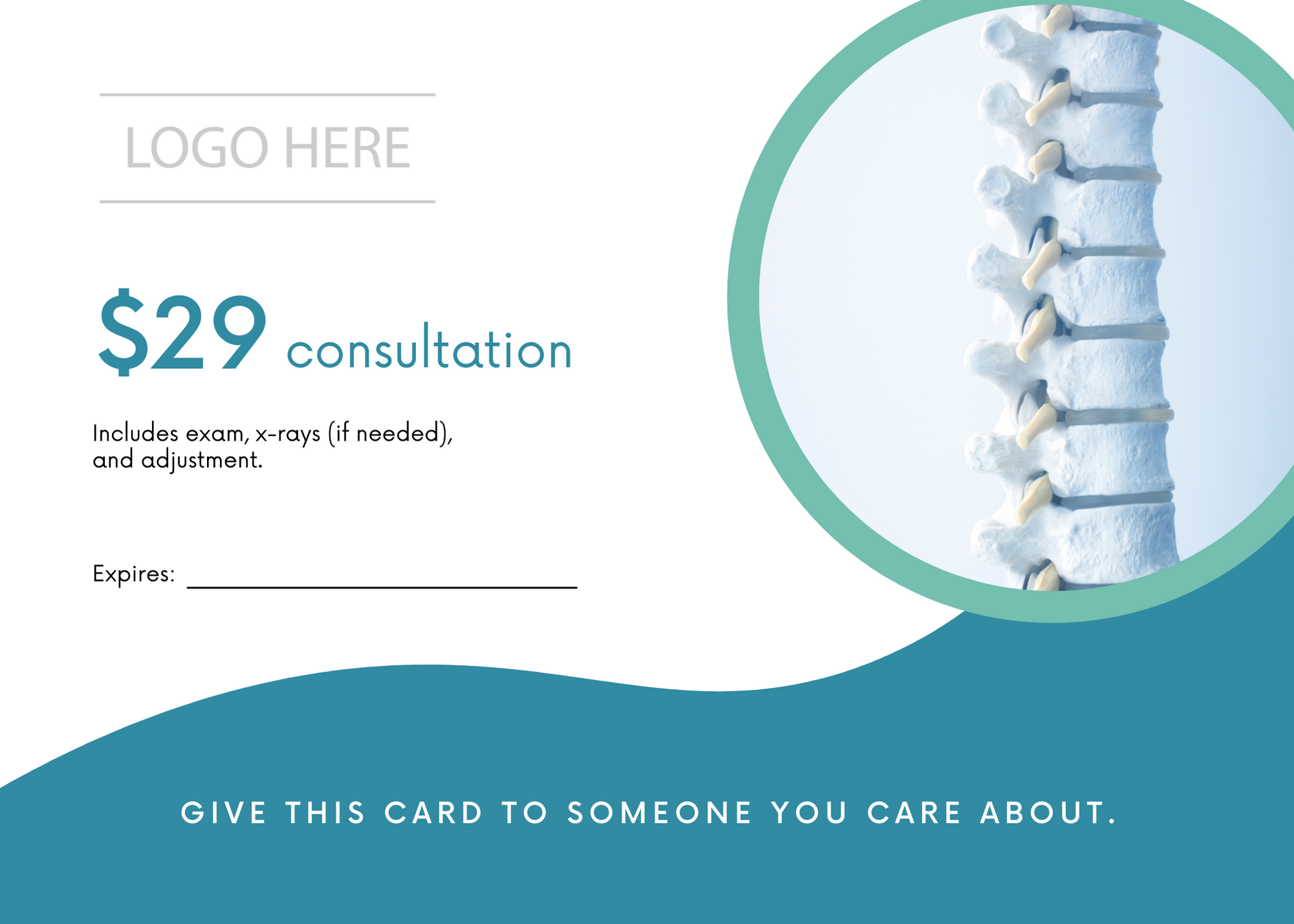
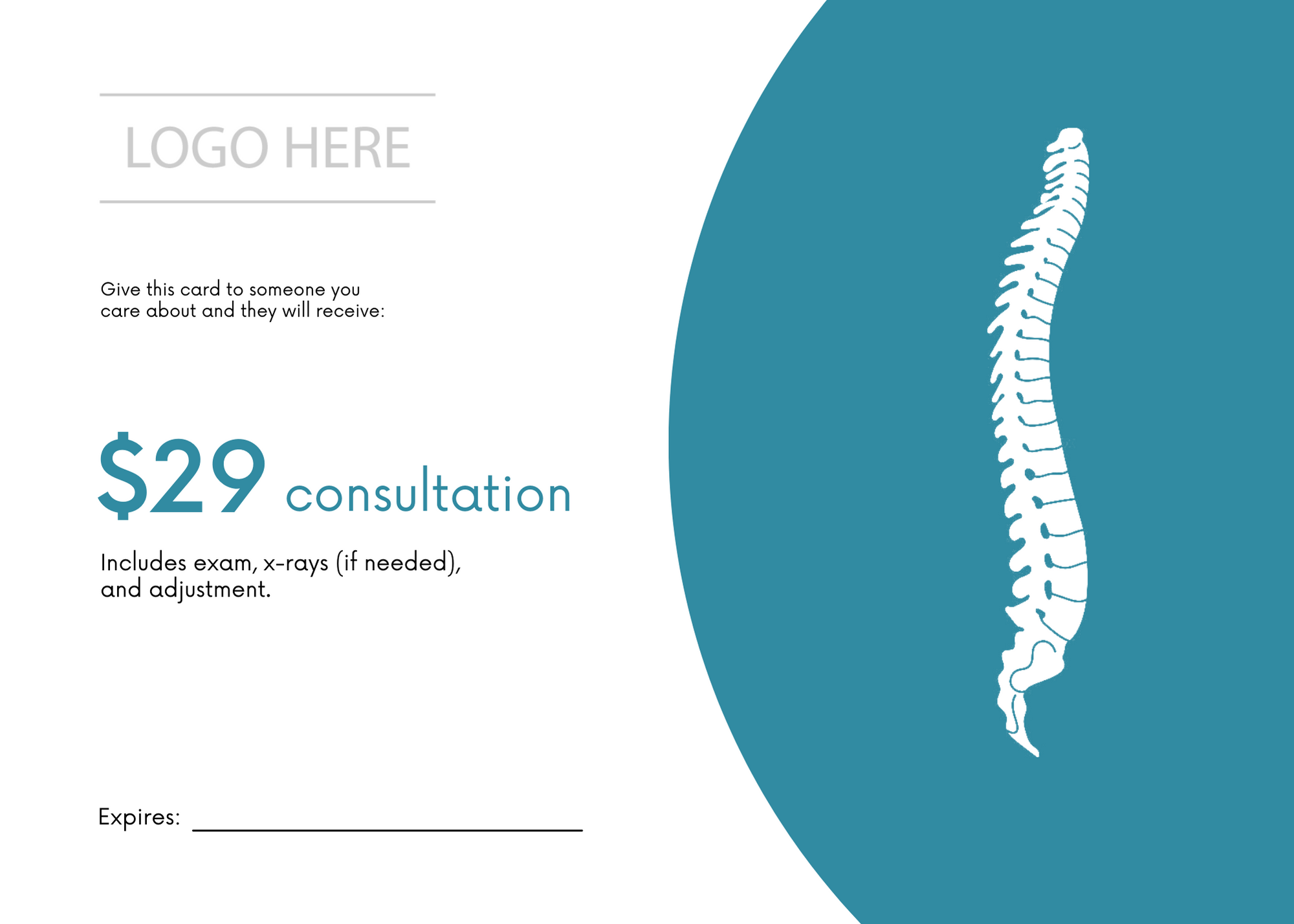
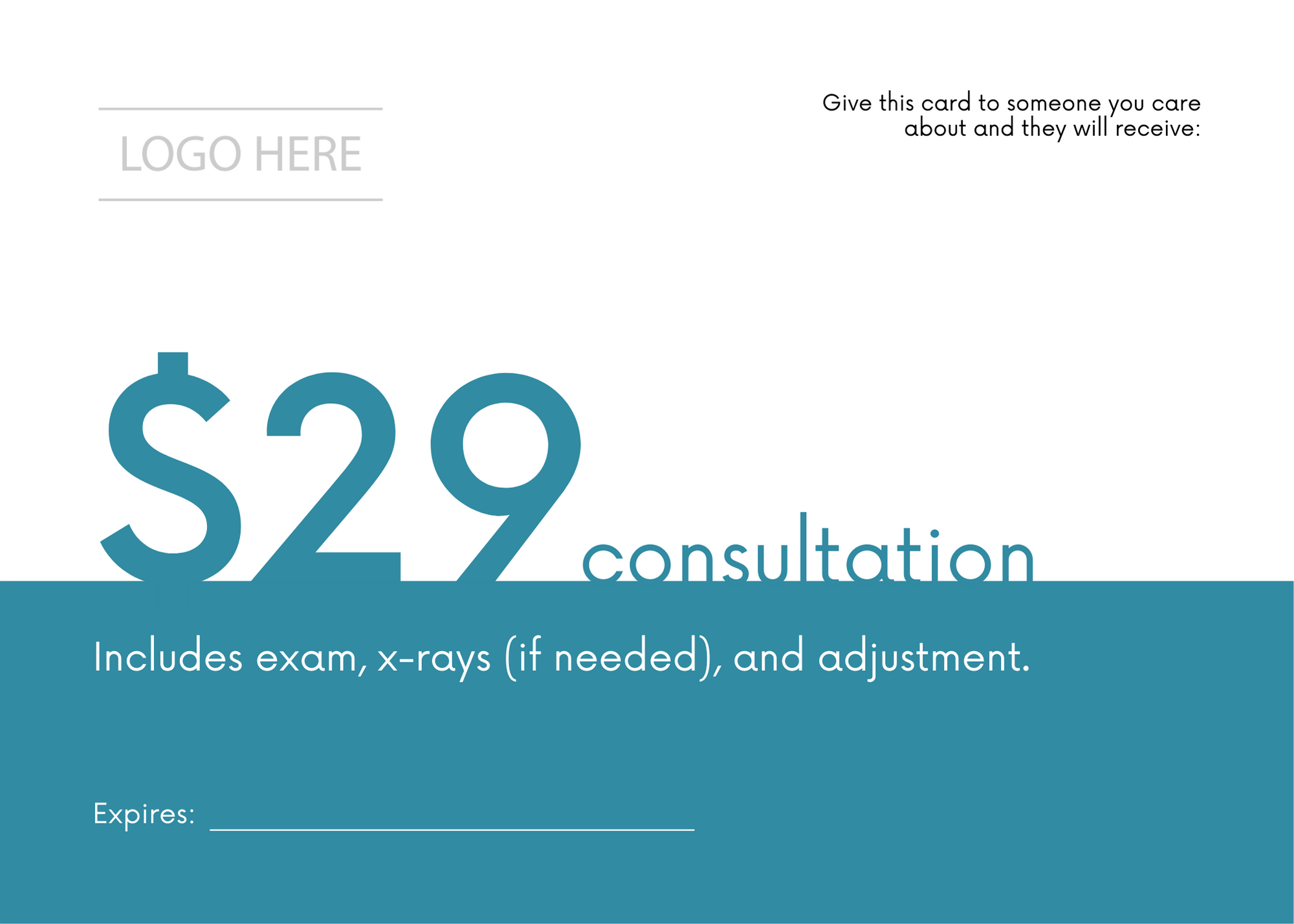
Patient referral cards
A referral card works because it’s physical. Your patient walks out holding it, so they have to make a decision: give it to someone, or throw it away. That moment of decision gets them thinking about who in their life could use you, outside your office, without you in the room.
Make your card say four things: who it’s for (“someone you care about”), what they get (your new patient offer), an expiration date, and how to book. Add a line for the referring patient’s name so you know whom to thank.
Referral email campaigns
You should be collecting every patient’s email address. Then send a simple referral email to your list every other month or once a quarter, asking patients to forward it to anyone who could use help. You’d be surprised how many referrals come from a reminder alone. Most email marketing tools let you schedule it to repeat automatically. (For more on staying in front of your list, see nurturing patients with email marketing.)
Digital referral forms (the one most practices miss)
A referral card relies on the friend picking up the phone. A digital referral form collects the friend’s name and phone number so you can reach out, instead of waiting and hoping.
You can text the form link after appointments, include it in your email campaigns, or fill it out for the patient in the office. That last one is underrated: when a patient mentions their sister’s neck pain, say “Want me to send her our new patient info?” and enter it on an iPad right there. Then an automation sends the friend a gentle, no-pressure message: “Hi Sarah, Jessica thought you might benefit from seeing us. Here’s what a first visit looks like if you’re interested.”
You’re taking control of the follow-up instead of leaving it to your patient to remember. This is exactly the kind of workflow our ENGAGE CRM runs automatically.

3. Make It Easy for the Friend to Say Yes
Here’s the part almost every referral guide leaves out. Your patient did the hard part: they convinced someone to try chiropractic. Now the referred friend calls, and one of three things happens:
- Nobody answers, and they don’t leave a voicemail.
- They get a callback two days later, after the motivation has faded.
- They can book online in under a minute.
Only the last one reliably turns a referral into a patient. Every referral you lose at the front door is wasted trust: your patient vouched for you, and the friend got voicemail.
To protect your referrals:
- Answer every call, or call back within minutes. If your front desk can’t always pick up, an AI receptionist can answer, answer questions and book around the clock.
- Offer online booking on your website and in every referral text, so the friend can book at 10 PM when they’re thinking about it.
- Give referrals their own landing page that explains what a first visit looks like, what it costs, and how to book. A friend who’s never seen a chiropractor has questions, and a website built to convert answers them.
- Mention the referrer when you follow up: “Jessica said you’ve been dealing with neck pain.” It reminds the friend why they reached out and that someone they trust sent them.
4. Family and Household Referrals
The easiest referral in chiropractic is the person who lives with your patient. Spouses, kids and parents often share the same mattress, the same desk setup, the same habits and the same stress. Yet many practices never ask about anyone beyond the patient on the table.
Make it routine:
- Ask on the intake form: “Does anyone else in your household have pain, headaches, or posture concerns?”
- Invite family to the report of findings. A spouse who hears the explanation firsthand often asks, “Should I get checked too?”
- Offer family care if it fits your practice: kids’ posture checks, prenatal care, sports care for teens.
- Ask directly at the right moment: “You mentioned your husband sits at a desk all day too. Has he ever been checked?”
These referrals don’t need a pitch. They need a question.
5. Incentivize Referrals (Carefully)
If you want to ramp up participation, a small incentive can get patients thinking about who they know. It doesn’t have to be big to work. It just has to give people a reason to pause and think, “Does my dad need care? Does anyone at work?”
Common approaches:
- Monthly prize drawings for everyone who refers, like a smart speaker or a gift basket.
- Small thank-you gifts such as a coffee shop treat or a practice-branded item.
- Recognition, like a “referral wall” or a thank-you shout-out in your newsletter (with permission).
- A new patient offer for the friend, so nobody feels awkward about passing it along.
Promote the program everywhere: signs in the office, your email list, and post-visit texts. Patients won’t participate in a program they don’t know exists.
Important: incentives are where referral programs get into legal trouble. Cash, general-purpose gift cards, and free services all carry real risk in healthcare, especially for Medicare and Medicaid patients. Read Are referral incentives legal? before you launch anything.
6. Thank Every Referrer

When someone sends you a referral, thank them personally. A phone call from the doctor or a handwritten card goes a long way, because it’s rare. Think about it: when was the last time a doctor called you to say thank you? Usually a call from a doctor’s office means bad news. A thank-you call stands out.
“Hi [Name], it’s Dr. [Name]. I just wanted to thank you for sending [Friend] our way. I’m really looking forward to helping them, and it means a lot that you trusted us with someone you care about.”
That positive reinforcement makes it far more likely they’ll refer again. And a patient who just got a personal thank-you is the perfect person to ask for an online review, the digital version of the same word of mouth.
7. Be a Great Doctor (and a Friend)
Every tactic in this guide depends on one thing: an experience worth talking about. Be personable. Remember details about each patient’s life so you can follow up: how their kids are doing, how the vacation went, whether they finished that half marathon. You want every visit to feel like catching up with a friend for a few minutes.
I’m an introvert myself, so I know this doesn’t come naturally to everyone. It’s still worth stretching for. Patients who feel like you genuinely care about them, not just their spine, are the ones who think of you when a friend mentions back pain at dinner: “You should see my chiropractor. Dr. Smith is great.”
A great experience also powers your online reputation, which is word of mouth at scale. The patient who would tell a friend about you will, if you ask, leave a five-star Google review that hundreds of strangers will read. See our guides to getting more patient reviews and reputation management.
Patient Events That Generate Referrals
Events give patients an easy, low-pressure reason to bring someone along. Instead of “come get checked by my chiropractor,” it’s “come to this fun thing with me.”
- Patient appreciation day. Celebrate your patients with snacks, giveaways and a relaxed atmosphere, and encourage them to bring a friend or family member.
- Bring-a-friend week. Patients bring a guest to their regular visit, and the guest gets a short consultation.
- Charity or food drive. Partner with a local cause and invite the community. It builds goodwill and gives patients something to share.
- Workshops and talks. A short evening talk on back pain, posture for desk workers, or healthy pregnancy gives patients something educational to invite people to.
- Community events. A booth at a 5K, a school sports day or a local festival puts you in front of people who’ve never met a chiropractor.
Make every event count: collect each guest’s name and phone number, follow up within a day, and have a clear next step ready (a booking link and a first-visit offer). And check your state’s rules first. Free or discounted services and screenings are regulated in some states, and offering them to Medicare or Medicaid patients carries its own risk.
Build Provider and Community Referral Partners
Patients aren’t your only referral source. Other professionals can send you a steady stream of pre-qualified patients. These relationships take longer to build than handing out cards, but they compound year after year.
| Partner | Why they refer | How to start |
|---|---|---|
| Primary care physicians | Many prefer to refer musculoskeletal complaints out | A short intro letter on the cases you help most |
| Physical therapists and massage therapists | Their work complements adjustments | Cross-refer and share notes |
| Personal-injury and auto-accident attorneys | Clients need care and documentation after a crash | Show you document thoroughly and communicate fast |
| OB/GYNs, midwives and doulas | Pregnant patients often have back and pelvic pain | Explain your prenatal training and approach |
| Gyms, CrossFit boxes, yoga and Pilates studios | Members get hurt and want to stay active | Offer a free talk or a mobility workshop |
| Running clubs and youth sports leagues | Athletes want to recover and perform | Sponsor an event, offer sports injury education |
| Local employers | Desk workers and laborers both deal with pain | Offer a lunch-and-learn on posture or lifting |
| Dentists and podiatrists | Jaw, foot and posture problems overlap with yours | Introduce yourself and cross-refer |
How to earn and keep provider referrals:
- Make the first move. Introduce yourself, explain exactly which cases you’re a great fit for, and make it effortless to send a patient your way.
- Close the loop like a specialist. When another provider refers a patient, send a brief report of findings back in their clinical language: what you found, your plan, and expected timeline. Nothing builds a two-way relationship faster than a chiropractor who communicates like part of the care team.
- Refer out, too. The fastest way to receive referrals is to give them. Send patients to the right PT, physician or specialist when that’s what they need.
- Stay in touch. A quick update on a shared patient’s progress keeps you top of mind.
A handful of strong provider relationships can outproduce a whole stack of referral cards.
Turn Past Patients Into Referrers
Your past patients are a referral source most practices ignore. They already know you and trust you. Many of them finished care feeling great and simply drifted away.
Reach out with a friendly check-in by email and text: how they’re doing, an invitation to come back for a tune-up, and a reminder that you’d love to help anyone they know. Some will come back themselves. Others will remember you the next time a friend complains about back pain. This is a natural part of a good email and text marketing program.
Chiropractic Referral Program: Your 90-Day Launch Plan
Knowing the tactics isn’t the hard part. Doing them every week is. Here’s a simple plan to launch your chiropractic referral program in 90 days:
Days 1 to 30: Build the basics
- Add “How did you hear about us?” and a referrer name field to your intake form.
- Write your scripts (use the ones above) and role-play them with your team.
- Order referral cards with your new patient offer and an expiration date.
- Set up a referral form and an automated text that goes out a few days after visits.
- Pick one person who owns the program and reviews the numbers monthly.
Days 31 to 60: Ask everyone, every time
- Doctor plants the seed with every new patient and asks at every win and re-exam.
- Front desk hands out cards at checkout to every patient who’s doing well.
- Send your first referral email to your active and past patient list.
- Thank every referrer by phone or handwritten card within a week.
- Reach out to three local providers and one community partner.
Days 61 to 90: Add a spark and review
- Run a patient appreciation day or bring-a-friend week.
- Launch a compliant incentive, like a monthly drawing, if you want an extra push.
- Review your numbers: referral share of new patients, top referrers, and where referred friends dropped off.
- Keep what’s working, fix what isn’t, and put the asks on autopilot.
Track the Numbers That Matter
A referral program you don’t measure is a hope. If you can’t answer “how many new patients came from referrals last month, and who sent them?” you can’t improve it or thank the right people.
| Metric | What it tells you | How to get it |
|---|---|---|
| Referral share of new patients | Is the program growing? | Referral source on every intake |
| Referrals received | Is the asking working? | Count of cards, forms and named referrals |
| Referred-to-booked rate | Is the front door working? | Referrals who booked a first visit |
| Top referrers | Who to thank and nurture | Referrer name on every intake |
| Partner referrals | Which relationships are paying off | Referral source by provider or partner |
Watch the trend month over month. There’s no universal “good” referral number, because it depends on your patient volume and how actively you ask. The goal is to grow it.
The practices that win at referrals make the whole loop automatic. With a CRM like ENGAGE, every patient gets a referral link a few days after a good visit, the friend gets an instant, friendly follow-up, and the source is tagged automatically, without your front desk having to remember. That’s the difference between referrals as a happy accident and referrals as a channel you can grow on purpose. It’s the same systems-driven approach behind the practices in our case studies.
Referral Mistakes That Kill Programs
- Not asking. The biggest one by far. Happy patients don’t refer unless you give them a reason and a moment.
- Asking at the wrong time. Asking at the first visit, before they feel better, feels like a sales pitch.
- Sounding desperate. “We need more patients” pushes people away. “I’d love to help people like you” pulls them in.
- Letting the friend fall through the cracks. A missed call or slow callback wastes the trust your patient gave you.
- Not thanking referrers. No thank-you, no second referral.
- Only the doctor asks. The front desk sees every patient. Train the whole team.
- Running illegal incentives. Cash or gift cards per referred patient can create real legal exposure.
- Not tracking anything. If you can’t see it, you can’t grow it.
- Treating it as a one-time campaign. Referrals come from habits, not a single push.
Referrals in the Age of AI Search
Word of mouth now has a digital twin. When someone asks Google’s AI Overview or ChatGPT to “recommend a good chiropractor near me,” the practices that get named tend to be the ones with a complete Google Business Profile, consistent information everywhere, and plenty of recent five-star reviews. That’s the same reputation your referral program is already building. Every happy patient you turn into a referrer (and a reviewer) also makes you more likely to be the practice an AI recommends. To get intentional about it, read our guides on SEO vs AEO for chiropractors and AEO and GEO for chiropractors.
Are Chiropractic Referral Incentives Legal?
Before you hand out a single reward, understand this: paying for referrals is regulated in healthcare, and the rules are stricter than in most industries. A reward that’s normal for a restaurant can cross a legal line for a doctor’s office. Here’s the background. This is general information, not legal advice:
- The federal Anti-Kickback Statute (AKS). It prohibits knowingly paying “remuneration” to induce or reward referrals for services covered by federal programs like Medicare or Medicaid. Because Medicare covers chiropractic spinal manipulation, chiropractors are not automatically exempt. Violations carry steep fines and even prison, and the Department of Justice has prosecuted chiropractors for paying for referrals.
- Beneficiary inducement rules. Giving things of value to Medicare or Medicaid patients to steer their choice of provider can trigger separate civil penalties, so rewarding the new patient can be as much of an issue as rewarding the referrer. That includes free or discounted services.
- State law and your chiropractic board. Many states go further than federal law. California’s Business & Professions Code §650, for example, broadly bars paying for patient referrals regardless of who pays for the care, cash patients included. Your state statutes and board rules are the ones most likely to apply to a cash-pay practice.
None of this means you can’t run a referral program. Most practices do. It means you should keep it clean:
- Favor thank-you gestures and recognition over per-referral rewards.
- Keep any reward modest and not tied to federally covered services.
- Remember that cash and general-purpose gift cards (Visa, Mastercard, Venmo and the like) are never treated as small “nominal” gifts. They’re the riskiest reward of all.
- Reward the act of spreading the word, not a payment per booked patient.
- When in doubt, ask a healthcare attorney and check your state board before you launch.
The safest referral engine isn’t the one with the biggest prize. It’s the one built on a great patient experience, where people refer because they want to.
Not legal advice. Referral-incentive laws vary by state and change over time. Confirm your program with a qualified healthcare attorney and your state chiropractic board before offering any reward.
Referrals reward practices that are intentional. Plant the seed early, ask at the right moments, make it easy for the friend to get in, thank the people who send you patients, and back it all with care worth talking about. Then let a system do the remembering. Do that consistently and your existing patients become your most trusted, and most affordable, marketing channel.
Chiropractic Referral FAQs
What is the best way to get more chiropractic referrals? Ask consistently at the right moments. Plant the seed at the first visit, ask when a patient tells you they feel better, hand them referral cards, and text a referral link after good visits. Then make booking easy for the friend and thank every referrer personally.
How do I ask patients for referrals without sounding pushy? Make the ask about helping people, not growing your practice. Try: “If you know anyone who’s struggling the way you were, I’d love to see if we can help them.” Set it up at the first visit so the later ask feels expected, not transactional.
When is the best time to ask a chiropractic patient for a referral? Right after a win. Good moments are when a patient says they slept through the night, a re-exam shows progress, they mention a family member in pain, or they leave a happy comment at checkout. Asking at a moment of gratitude feels natural to the patient.
What should a chiropractic referral card say? Keep it short: who it’s for (“someone you care about”), what they get (your new patient offer), an expiration date, your phone number and booking link. Leave a line for the referring patient’s name so you know whom to thank.
What incentives can chiropractors offer for referrals? Many practices use modest thank-you gifts, monthly prize drawings, or recognition like a referral wall. Avoid cash, general-purpose gift cards and anything tied to Medicare or Medicaid services. Rules vary by state, so confirm your program with a healthcare attorney first.
Are referral incentives legal for chiropractors? It depends on your state and your patients’ insurance. The federal Anti-Kickback Statute covers rewards tied to Medicare and Medicaid services, and some states, such as California, restrict paying for any patient referral. This is not legal advice: check with a healthcare attorney and your board.
How do chiropractors get referrals from medical doctors? Introduce yourself with a short note on which cases you help most, then send a brief report of findings back on every patient they refer. Doctors keep referring to chiropractors who communicate like part of the care team. Refer patients to them when that’s right, too.
How do you track chiropractic referrals? Ask “How did you hear about us?” at intake and log the referrer’s name on every new patient. Each month, review referral share of new patients, how many referred people booked, and your top referrers. A CRM can tag the source and follow up automatically.
How long does a chiropractic referral program take to work? The asking part works as soon as you start, because most patients have never been asked. Provider and community partnerships build over months. Run the program for at least 90 days before judging it, and compare referral numbers month over month.
Do patient appreciation days bring in referrals? They can, when they’re built around guests. A patient appreciation or bring-a-friend day gives patients an easy, low-pressure reason to bring someone. Collect guests’ contact details, follow up within a day, and check your state’s rules on free or discounted services first.
Prefer to listen? Hear Nick walk through the core referral steps on the CHIROBASIX Podcast. For more ways to grow beyond referrals, see our chiropractic marketing ideas.
Ready to turn your patients into a referral engine? CHIROBASIX builds the websites, CRM, and automated follow-up that make referrals happen on autopilot. Book a free call and we’ll map out a plan for your practice.
Keep reading
Chiropractic Google Ads Benchmarks 2027: Cost per Click, Cost per Conversion and Monthly Spend
What chiropractic practices actually pay for Google Ads: cost per click, cost per conversion, monthly spend, click-through and conversion rates, the monthly trend, branded vs non-brand campaigns, and the ranges that tell you whether your account is healthy.

Chiropractic Logo and Branding: How to Build a Brand Patients Remember
How to build a chiropractic brand patients remember: logo types, the clichés to avoid, colors, fonts, naming, trademark basics, a brand kit checklist and how to choose a designer.

Chiropractic Review Request Templates: 30+ Texts, Emails and Scripts
A copy-paste library of chiropractic review request templates: in-office scripts, texts, reminders, emails, QR card copy, Spanish versions, and a what-not-to-say table.
Want this kind of strategy built for your practice?
Book a free consultation. We'll audit your current marketing and map out the omnipresence plan for your local market.
Book A Free Consultation